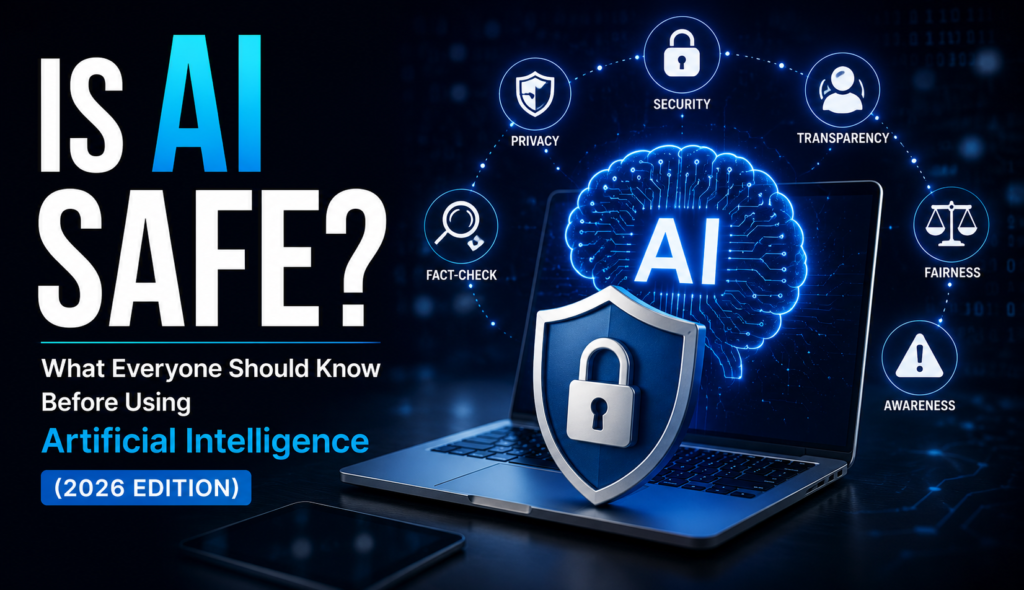
Artificial intelligence is becoming part of everyday life.
People use AI to write emails, create images, plan vacations, learn new skills, organize work, and even help run businesses. As AI becomes more common, it’s natural to wonder:
“Is AI actually safe to use?”
The short answer is:
Yes—AI can be very safe when it’s used responsibly.
Like the internet, smartphones, or social media, AI is a tool. It offers many benefits, but it’s important to understand its limitations and use it wisely.
In this guide, we’ll explore the advantages, potential risks, and practical steps you can take to use AI safely and confidently.
The Good News About AI
For most people, using AI is no more dangerous than using a search engine or other online service.
Millions of people use AI every day to:
- Learn new skills
- Write documents
- Brainstorm ideas
- Translate languages
- Plan trips
- Organize schedules
- Improve productivity
When used thoughtfully, AI can save time, reduce repetitive work, and make information more accessible.
For everyday tasks, AI is generally a safe and helpful technology.
Understanding the Risks
Although AI has many benefits, it’s not perfect.
Knowing its limitations is one of the best ways to use it safely.
Let’s look at some of the most common concerns.
AI Can Make Mistakes
One of the biggest misconceptions is that AI is always correct.
It isn’t.
Sometimes AI may:
- Misunderstand your question
- Provide incomplete information
- Give an outdated answer
- Present incorrect information confidently
This is why you should always verify important facts before relying on them.
If you’re making decisions about your health, finances, legal matters, or personal safety, use AI as a starting point—not your only source of information.
Be Careful With Personal Information
AI conversations can feel very natural, but it’s still important to think before sharing sensitive information.
Avoid entering:
- Passwords
- Bank account numbers
- Credit card information
- Social Security numbers
- Medical records
- Confidential work documents
- Private client information
If you wouldn’t post something publicly or email it to a stranger, think carefully before sharing it with any online service.
Protecting your personal information is always a good habit.
AI Doesn’t Replace Professional Advice
AI can explain concepts and provide general guidance, but it shouldn’t replace qualified professionals.
For example:
If you have a medical concern, speak with a licensed healthcare provider.
If you need legal advice, consult an attorney.
If you’re making major financial decisions, consider speaking with a qualified financial professional.
AI is a useful learning tool, but important life decisions deserve expert guidance.
Watch Out for AI-Generated Scams
As AI becomes more powerful, scammers are finding new ways to misuse it.
Examples include:
- Fake emails that look convincing
- AI-generated voice impersonations
- Fake customer support messages
- Fraudulent social media accounts
- Deepfake videos designed to deceive
These scams often rely on creating a false sense of urgency.
Before sending money, sharing personal information, or clicking unfamiliar links, take a moment to verify that the request is legitimate.
A few extra minutes of caution can prevent serious problems.
AI Can Reflect Bias
AI learns from information created by people.
Because of that, it can sometimes reflect biases that exist in the data it was trained on.
This doesn’t mean AI is intentionally unfair, but it does mean its responses aren’t always neutral or complete.
When researching important topics, it’s wise to compare information from multiple reliable sources and consider different perspectives.
Can AI Create Fake Content?
Yes.
AI can generate realistic:
- Images
- Videos
- Audio recordings
- Written articles
Some of this content is creative or educational, but some is designed to mislead people.
Before believing or sharing surprising content online, ask yourself:
- Where did it come from?
- Is it from a trustworthy source?
- Can it be verified elsewhere?
Developing healthy skepticism is an important digital skill in the age of AI.
Tips for Using AI Safely
Using AI responsibly doesn’t have to be complicated.
Here are a few simple habits that go a long way.
Verify Important Information
Double-check facts involving health, money, legal issues, or major decisions.
Protect Your Privacy
Avoid sharing sensitive personal or financial information unless you’re using a trusted service and understand how your information will be handled.
Think Critically
AI can be helpful, but it’s not perfect.
Review its responses and use your own judgment before acting on them.
Use Trusted AI Platforms
Stick with well-known AI services that have clear privacy policies, regular updates, and a good reputation.
Keep Learning
AI technology evolves quickly.
The more you understand how it works, the easier it becomes to recognize both its strengths and its limitations.
Common Misconceptions
“AI is dangerous.”
AI itself isn’t inherently dangerous.
Like many technologies, it can be used responsibly or irresponsibly.
“Everything AI says is true.”
No.
AI can make mistakes, which is why verification is important.
“AI steals all my information.”
Reputable AI providers typically explain how they handle user data, but it’s still your responsibility to avoid sharing highly sensitive information unnecessarily.
“Only experts can use AI safely.”
Not at all.
Anyone can use AI safely by following a few basic best practices.
Frequently Asked Questions
Is it safe to use AI every day?
Yes.
Millions of people use AI daily for writing, learning, planning, research, and productivity.
Should children use AI?
AI can be a valuable educational tool, but younger users should have guidance from parents or teachers to help them understand its limitations and use it responsibly.
Can AI replace doctors or lawyers?
No.
AI can provide general information, but it should not replace professional advice for medical, legal, or financial matters.
Is AI getting safer?
In many ways, yes.
AI developers continue improving safety features, privacy controls, and content moderation. At the same time, users should stay informed because the technology is evolving quickly.
Final Thoughts
Artificial intelligence is one of the most useful technologies available today, but like any powerful tool, it should be used thoughtfully.
For most people, AI is perfectly safe for everyday tasks such as writing, learning, brainstorming ideas, organizing schedules, and improving productivity. The key is understanding what AI does well, recognizing where it has limitations, and protecting your personal information.
The safest approach is also the smartest one: use AI as a helpful assistant, verify important information, think critically, and rely on qualified professionals when the stakes are high.
AI isn’t something to fear—but it is something to understand. With a little knowledge and a few good habits, you can use AI confidently and enjoy the many benefits it has to offer.
As AI becomes a bigger part of everyday life, informed users will always have the greatest advantage. Learning how to use AI safely is one of the best investments you can make in your digital future.